Climate Finance Overview
Vanuatu, like most Small Island Developing States (SIDS), bears little responsibility for climate change, but its geographical, socioeconomic and climate profiles make it particularly vulnerable to its impacts. Despite this, Vanuatu remains poorly funded, and approved finance fulfils only a small part of actual needs. With most finance focused on adaptation, the Pilot Program for Climate Resilience (PPCR) and the Least Developed Countries Fund (LDCF) are the biggest contributors. Vanuatu is gearing up to access transformational development finance from the Green Climate Fund (GCF), but substantial scaling up both climate adaptation and mitigation finance to Vanuatu is vital - both to address the vulnerability of its inhabitants by making agriculture, biodiversity and infrastructure sectors more resilient to climate impacts, and to shift the energy mix away from fossil fuels.
Vanuatu currently faces several challenges in regard to mobilizing climate finance:
-
Access to climate finance is difficult because the different requirements of different sources are complex and cause duplication efforts. Traditionally, multilateral and bilateral financing intermediaries such as World Bank, UN Agencies and multilateral development banks (MDBs), have played an important role in distributing and channeling climate finance to Vanuatu. Direct access is limited by Vanuatu’s inability to currently meet the strict fiduciary standards required by international funds.
-
Coordination of climate finance is also challenging due to the proliferation of climate finance mechanisms, and Vanuatu’s newly developing NAB governance structures. Ensuring country ownership has been difficult. It is difficult for Vanuatu to monitor, report, and verify (MRV) climate finance, as well as to account for its effective and equitable use. Keeping track of climate finance has been particularly difficult for Vanuatu due to unclear attributions (dedicated climate funds (i.e. those that only invest in climate activities) and climate - relevant funds (i.e. where climate - relevant activities are part of the investment, even though they are not explicitly identified or labelled as mitigation or adaptation activities as such) are labelled as climate finance). Additionally, much climate finance flows through civil society agencies without being officially reported through Government tracking processes. Use of different accounting practices also makes it difficult to adequately tracked by Government. Vanuatu’s Climate Public Expenditure & Institutional Review CPEIR report1 provides more in-depth details about this. A background summary of NIE accreditation towards the Adaptation Fund is provided in annex 1.
- Making detailed climate finance investment plans is still challenging, as Vanuatu, NDC and other climate policy frameworks only indicate broad finance goals, but not targets, what will be financed and how. There are gaps in national and sectoral policies and strategies that should direct the mobilization of climate resources. Vanuatu does not yet have a concrete climate investment pipeline. This is due in part to a lack of predictability of finance from various sources.
The NAB Climate Finance Working Group
Background
The Climate Finance Working Group (CFWG) serves as the consultative arm of the NAB Secretariat to progress issues related to climate finance.
Objectives
The primary duties of the CFWG are:
- To provide strategic direction on climate finance-related matters for the Ministry of Climate Change Adaptation and the Government of Vanuatu;
- To progress the National Implementing Entity (NIE) Accreditation agenda to provide direct access to multilateral climate funds such as the Green Climate Fund and the Adaptation Fund;
- To support the NAB as required to facilitate dialogue with partners on climate finance issues; and
- To support the coordination, steering, and implementation of climate finance programmes and projects.
The CFWG generally meets on a monthly basis to achieve its duties outlined above.
Climate Finance Members
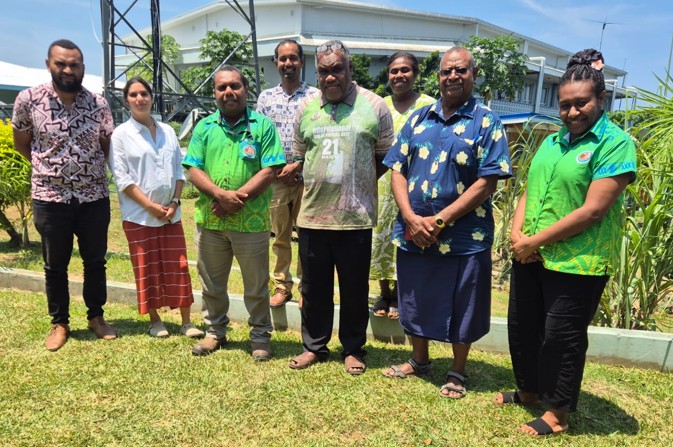
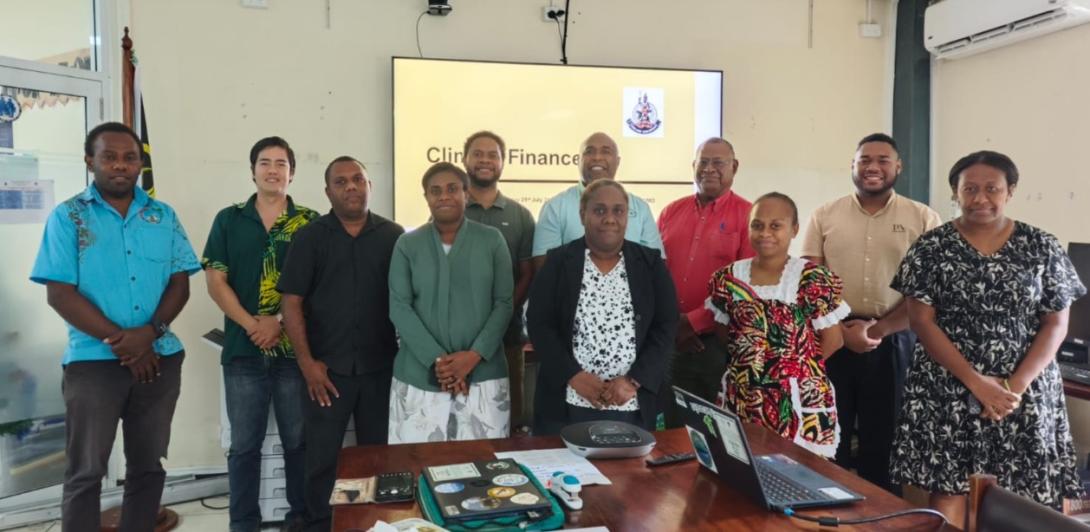
The CFWG is chaired by the Strategic Manager of the NAB Secretariat and is composed of 11 members representing:
- Ministry of Climate Change Adaptation (MoCC),
- NAB Secretariat (Chair)
- Prime Minister’s Office (DSPPAC),
- Ministry of Finance and Treasury (DoFT),
- Department of Climate Change (DoCC),
- Climate Finance Advisor (Commonwealth),
- Global Green Growth Institute (GGGI),
- Non-governmental organizations,
- Development partners,
- Private sector partners, such as Vanuatu Climate Action Network (VCAN)
- Vanuatu Business Resilience Council (VBRC)
Working Group Meeting Minutes
Year 2026
Meeting #1 -
Meeting # 2 -
Meeting # 3 -
Meeting # 4 -
Resources
The Terms of Reference for the CFWG is accessible here.