
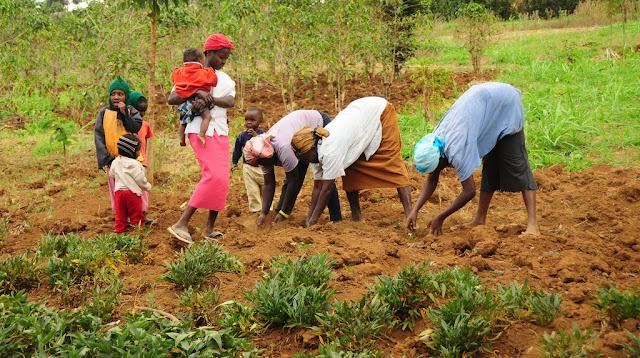
It underscores the importance of social norms and intra-household decision making in influencing whether and how women are able to participate in, and benefit from, sustainable agriculture. The brief cautions practitioners from working with women separately from men and stresses the need to provide space for women and men to engage in joint decision making. It also calls for practitioners to engage in iterative learning processes to improve gender equity and outcomes from projects.
The brief notes that moving activities away from an emphasis on carbon finance and instead focusing on climate-smart smallholder agriculture may promote more equitable benefit distribution for women. ICRAF is a member of CGIAR. [Publication: Addressing Gender in Climate-Smart Smallholder Agriculture] [CCAFS Website] [SACC Project Website]