The different messages displayed on posters about the project activities and how it benefited the people in a rural community in Vanuatu especially in Lelepa Island in the Shefa Province as the pilot site.
The wonderful Lelepa island, part of the Roi Mata’s Domain and a UNESCO World Heritage Site, is interesting not only in its culturally important role, but also in its development potential. As part of the Prove of Concept project (POC), the project team was able to carry out an initial infrastructure test with its innovative swarm technology and equip five buildings on the island with solar power based on a Flex-Grid1 meter based mini-grid.
The Department of Climate Change has produced its first ever newsletter as the December 2019 Issue.
The newsletter highlights success stories from climate change projects, Department activities and the achievements from other stakeholders through partnerships throughout this year 2019.
We hope you will learn alot from the stories in side this our first issue and we hope to bring you more success stories of the work of DOCC in our fight towards climate change impacts in our country Vanuatu in our upcoming issues.
See the attachment for the newsletter.
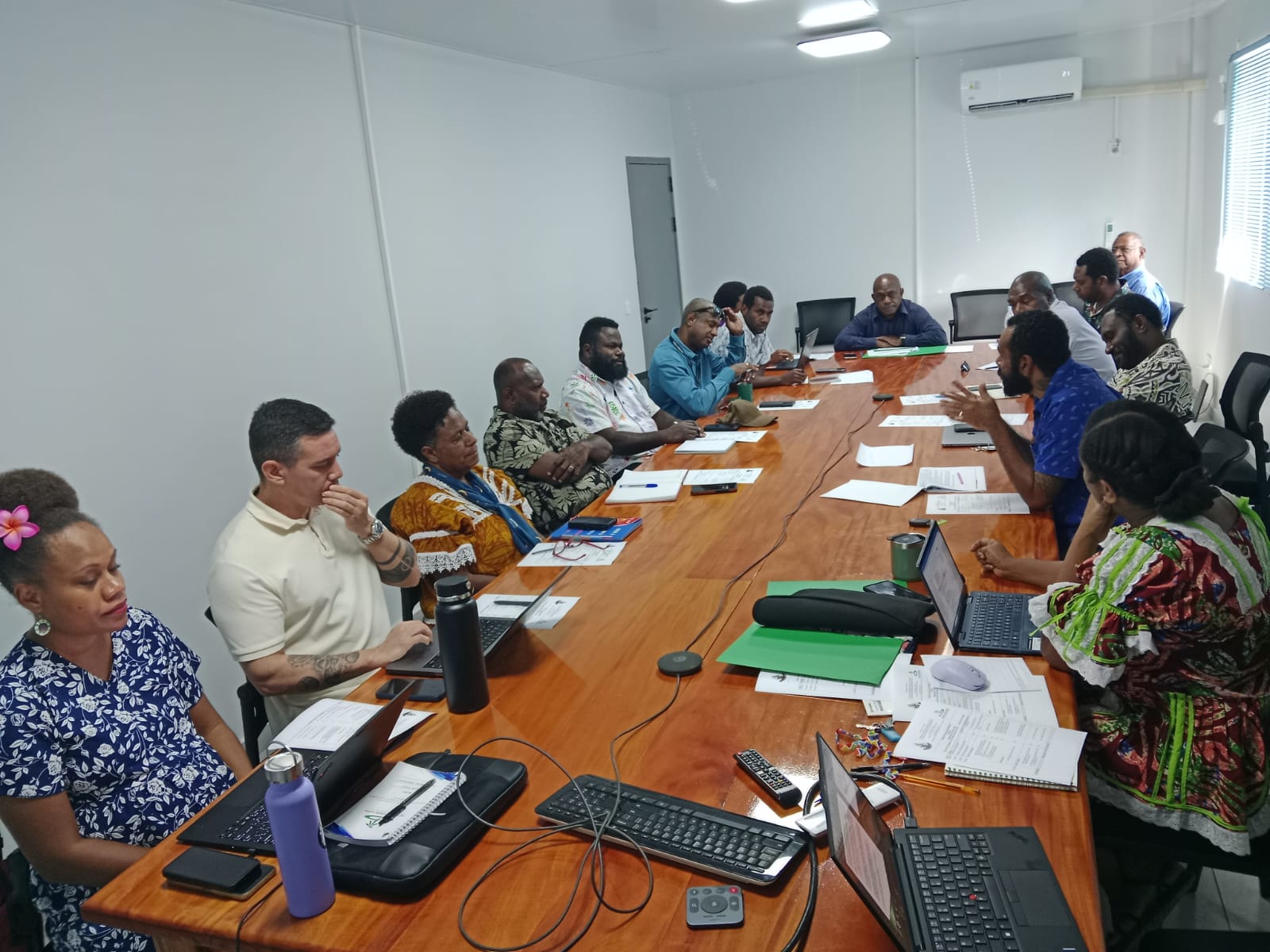
The National Advisory Board Meetings and Membership was legislated by the Meteorology, Geological Hazards and Climate Change Act 2016
In keeping with the Vanuatu Right to Information Act (Act No. 13 of 2016), Meeting minutes are downloadable below.
NDC Explorer
Pacific Data Hub
Vanuatu Environmental Data Portal
Carbon Footprint Calculator
Adaptation Project Tool
Welcome to the Climate Investment Database
The Pacific Climate Investment Database (CID) is a publicly available database containing a comprehensive overview of primary climate finance projects in the Pacific. Though there is a framework for determining ‘primary’ climate finance, many of the projects are based on the judgement call of the composer, not having total access to individual breakdowns of the projects to determine how much finance is dedicated to purely climate change causes.
Monthly Tide Calendars for Vanuatu
Real Time Sea Level Display for Vanuatu
1. What is the source of the real-time data on the display?
The sea level and meteorological data displayed are those received from tidal gauge facilities located in countries in the Pacific.
2. What are the sea level predictions and where to they come from?
These are tide predictions generated by the Australian National Tidal Centre (tides@bom.gov.au) and are revised every year. These predictions do not include the effects of any local conditions that may occur throughout the year, such as weather patterns.
Pacific Ocean Portal. . © 2019 Geoscience, Energy and Maritime Division, Pacific Community (SPC)
Get up to date climate science variables on the ocean, with special application for sectors including tourism, fisheries, and coral reef management.
It’s great that you're keen on seeing what the Vanuatu coast may look like in 2100. Here is some information on how to get the most out of Coastal Risk Vanuatu (CRV). This version has been opened for public consultation, therefore if you experience any issues, or wish to provide feedback please submit a comment using the feedback link provided. If you enjoy the experience, feel free to like us with Twitter or LinkedIn by clicking the icons in the top right of your screen.
Technical Need Assessment (TNA) for Vanuatu is funded by the UNDP partering with the GIZ. The objective of the TNA is to firstly identified priority sectors in the mitigation processes. The NAB has approved of the energy and waste to be considered for this TNA.
The Adaptation Project Tool provides guidance to Pacific Islands Countries in developing and planning climate change projects, resilient development and disaster risk reduction projects.
Vanuatu has submitted its INDC to United Nations Framework Convention on Climate Change (UNFCCC) on 29 September 2015 and the same document was endorsed and submitted as the first Nationally Determined Contribution (NDC) on 21 September 2016. Although being a Small Island State with a small carbon footprint, Vanuatu has committed to a challenging mitigation target in its NDC of transitioning to close to 100% renewable energy in the electricity sector by 2030. Achieving this target would replace nearly all fossil fuel requirements for electricity generation in the country.
Vanuatu’s Integrated Monitoring Reporting and Verification (MRV) Tool for Climate Action Tracking