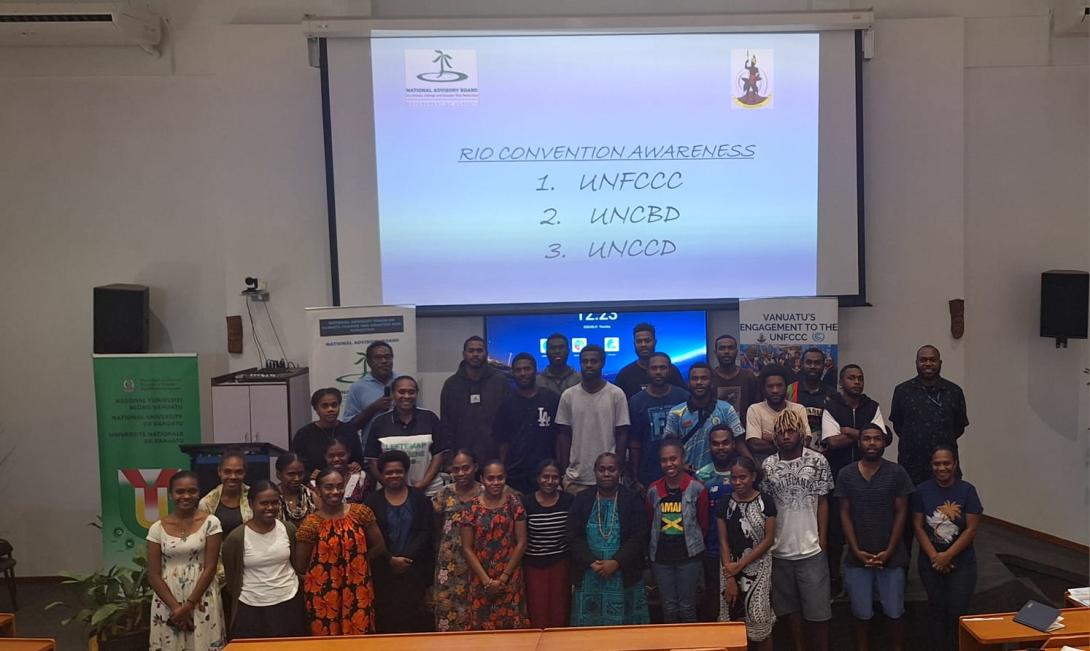
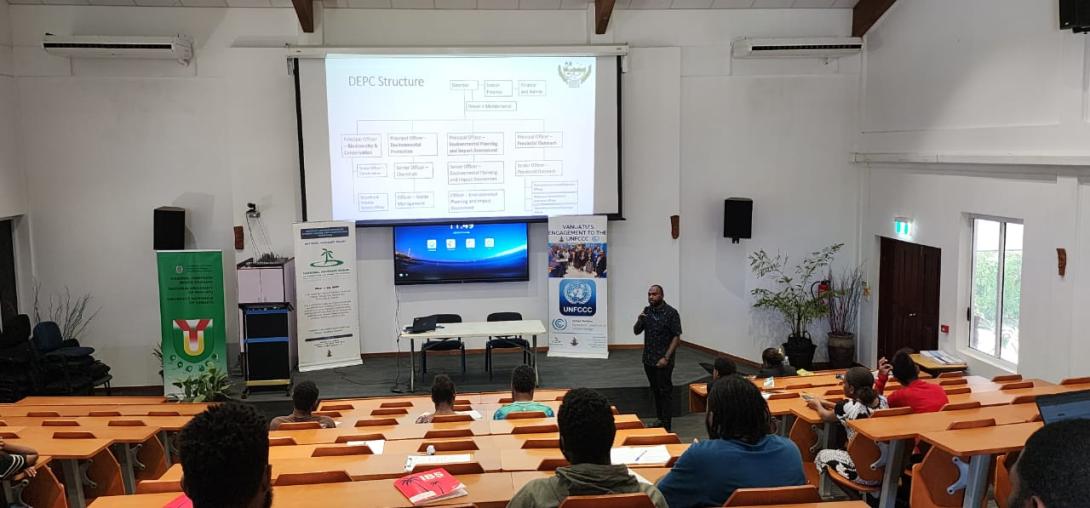
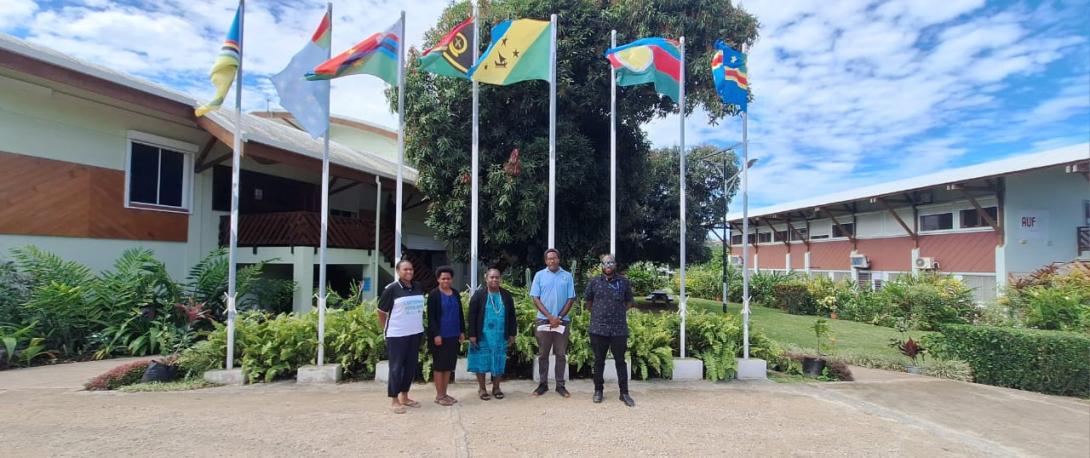
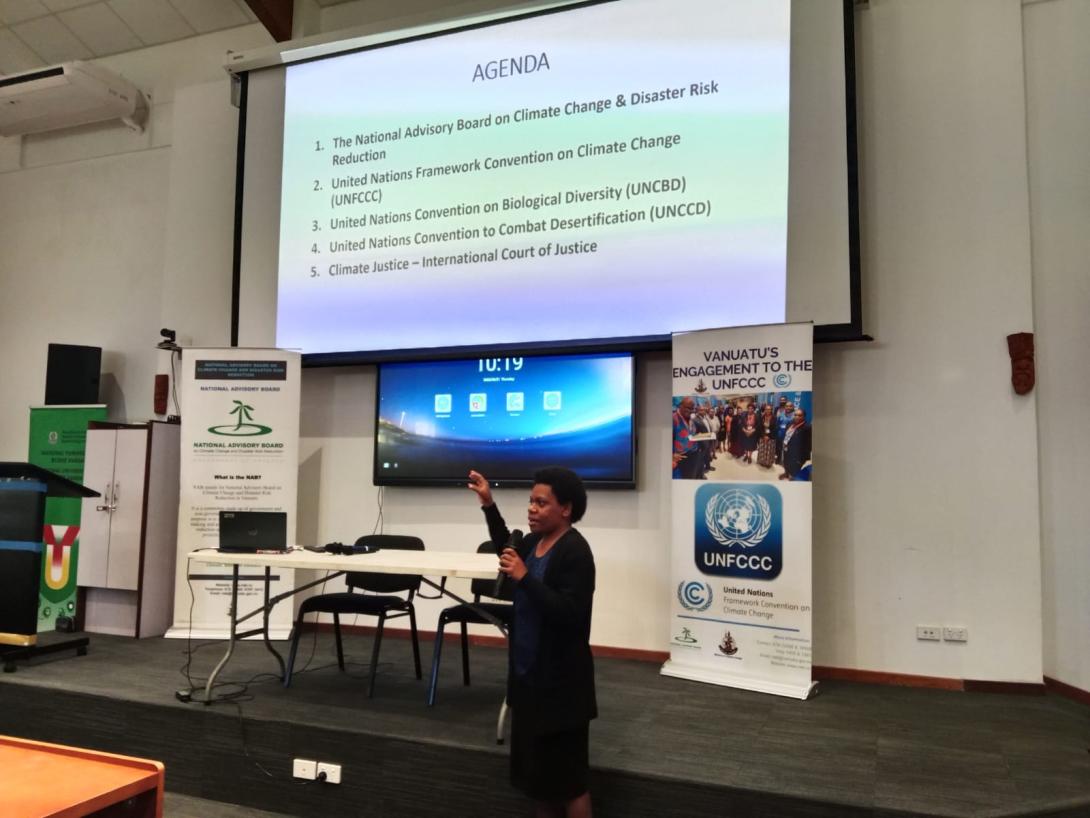
The NAB Secretariat and the Department of Environmental Protection and Conservation (DEPC) jointly conducted a Rio Conventions awareness activity for students of the National University of Vanuatu. The activity forms part of ongoing national efforts to build understanding among young Ni-Vanuatu of the three Rio Conventions and their relevance to Vanuatu's development, climate resilience, and environmental sustainability.
The awareness session aimed to:
- Introduce students to the three Rio Conventions and their core purposes.
- Explain how each convention connects to Vanuatu's national priorities and everyday life.
- Encourage informed, engaged, and environmentally responsible future leaders and professionals.
- Strengthen collaboration between the NAB Secretariat and DEPC in delivering joint public awareness programmes.
The session was jointly led and facilitated by representatives of both teams:
- Mrs. Florence Iautu — NAB Secretariat
- Mr. Dean Wotlolan — Department of Environmental Protection and Conservation (DEPC)
- Ms. Leana William — NAB Secretariat
- Ms. Cynthy Hosea — NAB Secretariat
The target audience was the students at the National University of Vanuatu (NUV), representing the country's emerging generation of graduates, professionals, and future decision-makers across various fields of study. The awareness was mainly providing information's to students about the three (3) Rio Conventions and their relevance to Vanuatu.
The Vanuatu National University (VNU) has started with welcome remarks done by Mr. Mathew Kensen and follow by Dr, Robsen Tigona and also welcoming the Ministry of Climate Change team that includes NAB Secretariat and DEPC team, that has reached out and do the RIO Convention awareness here, as these are the very important information's, youths and students needs to know about for our Country.
At the awareness, we have Ms. William, who she has explained to the students about the United Nations Framework Convention on Climate Change (UNFCC), She has continued highlights, that UNFCCC is the global treaty that guides international action to address climate change. For Vanuatu, one of the country's most vulnerable to sea-level rise, cyclones, and changing rainfall patterns, the convention underpins the country's access to climate finance, its National Determined Contributions (NDCs), and its voice in global climate negotiations. Students were shown how climate change directly affects food security, coastal communities, infrastructure, and livelihoods across the islands. In addition, Mr. Wotlolan, continue the awareness explaining the two (2) other Conventions, The United Nations Conventions on Biological Diversity) (UNCBD)and The United Nations Convention to combat Desertification (UNCBD). The UNCBD focuses on the conservation of biodiversity, the sustainable use of natural resources, and the fair sharing of benefits arising from genetic resources. Vanuatu's rich terrestrial and marine biodiversity supports subsistence livelihoods, traditional knowledge, tourism, and food systems. The session highlighted the importance of protecting ecosystems such as forests, reefs, and agrobiodiversity for future generations. The United Nations Convention to Combat Desertification (UNCCD) addresses land degradation and promotes sustainable land management. While Vanuatu is not a desert-prone country, land degradation, soil erosion, unsustainable agricultural practices, and loss of arable land remain relevant concerns for food security and rural livelihoods. Students learned how sustainable land use practices connect to resilience and long-term development.
The NAB Secretariat and the DEPC team has also provided information's on the key Messages delivered:
- The three (3) Rio Conventions are interlinked and collectively support Vanuatu's sustainable development and climate resilience goals.
- Vanuatu, as a Party to all three conventions, has both obligations and opportunities, including access to international support and finance.
- Young people, particularly university students, have a critical role to play as future custodians, advocates, and implementers of environmental commitments.
- Local and traditional knowledge is a valuable complement to international environmental frameworks.
The awareness activity strengthened students' understanding of the Rio Conventions and their practical relevance to Vanuatu. It also reinforced collaboration between the NAB Secretariat and DEPC as joint custodians of national reporting and coordination on the three conventions, setting a foundation for continued engagement with tertiary institutions.
- Conduct similar awareness sessions on a regular basis across other faculties and campuses.
- Develop simplified awareness materials (posters, factsheets, social media content) tailored for youth and student audiences.
- Explore opportunities for student involvement in NAB Secretariat and DEPC activities, such as internships or youth focal point programmes.
- Continue joint planning between the two teams to ensure consistent and coordinated messaging on the Rio Conventions.