Short Title:
MACBLUE - Coastal Carbon Sinks Pacific
Description

Starting Situation

Seagrass, mangroves and salt marshes sequester carbon at rates up to 66 times faster than terrestrial forests and store up to 5 times more carbon per hectare. Pacific Island Countries (PICs) possess significant Seagrass and Mangrove (SaM) resources, providing further ecosystem services related to shoreline protection, food security, tourism revenue and water quality. Habitat loss has been increasing rapidly, yet no adequate baselines exist to determine extent of habitats, rates of loss, or design of targeted management solutions. Methods for the assessment of carbon stocks and emissions in SaM areas exist since 2012, but have not been applied consistently to SaM areas in PICs. Policy makers and researchers note the urgent need to collect nationally relevant SaM data based on consistent methods, that ensure transparency and traceability to mitigate the loss of the world’s coastal carbon sinks and reduce the decline of coastal biodiversity.


Short Project Description

In close collaboration with national and regional partners (SPREP, SPC, USP, CSIRO, CIFOR) and the “Blue Planet” Initiative within the global Group on Earth Observations (GEO), the project will be mapping the SaM status in each of the 4 partner countries, and will assess related carbon storage capacity and ecosystem services. Resulting national inventories of SaM habitats, and associated blue carbon sinks and ecosystem service values will support government partners and policy makers in their efforts to strategically develop and implement conservation, management and rehabilitation efforts. Governments will be assisted to establish nationally appropriate incentives for sustainable management and rehabilitation efforts based on the quantification and documentation of SaM carbon stocks and the resulting emission reductions as part of NDCs and National Adaptation Programmes of Action (NAPAs).

Replication Potential

In the context of collaboration with national and regional technical agencies the project will refine and adapt remote sensing data technology for SaM mapping and carbon storage assessment methods for wide-ranging application in PICs during and beyond the project period. Project-based demonstration of effective mapping, monitoring and management regimes aims to foster and support national and regional capacity and up-scaling of these approaches in partner countries and neighbouring PICs. Collaboration and sharing of techniques and experiences with the IKI project “Blue Solutions – Implementing the CBD Strategic Plan in the field of marine and coastal biodiversity” and with the currently planned regional project on “Conservation of biodiversity, seagrass ecosystems and their services – safeguarding food security and resilience in vulnerable coastal communities in a changing climate ” will maximise replicability within the wider region and in collaboration with further global stakeholders
Funding
Donor
Organisation: BMUB-the International Climate Initiative (IKI) of the German Federal Ministry for the Environment, Nature Conservation, Building and Nuclear Safety
Total Funding USD:
$10,066,198.00
Progress Indicator
50-75%
FRDP Goals
Goal 2: Low-carbon Development
Project Status
Current
Project Comments

BMUB-Funding: 9.220.000 Euro in USA is - USD 10.066056

Project Type
Planning and Governance
Policy Formulation and Integration
Policy Support
Implementing Entity/Organisation
Organisation: GIZ
Project Contact
Name: Jesse Benjamin
Additional details: Department: Department of Environmental Protection and Conservation Position: Director General-Ministry of Lands and Natural Resources
Project Map Points
Short Title:
GEF8_Restoring and Protecting Bio
Description

The project will improve climate change resilience, food security and livelihood opportunities through community led NBS in coastal communities in Vanuatu. The expected impact is improved and resilient biodiversity, coastal lands, nearshore aquatic resources and livelihoods for the local population.


Primarily, the project will benefit the governments of Vanuatu, and will directly improve the lives of 22,500 beneficiaries/5,000 households equally distributed across Vanuatu. Women and youth will be prioritized, but because the project aims to improve biodiversity, coastal lands, nearshores and aquatic resources, it will benefit the entire populations of Vanuatu.


The project starts with a participatory approach with stakeholder engagement activities for the identification of NBS and the identification and development of women and youth lead entrepreneurship. Through these approaches, participatory conservation and restoration efforts will be truly led by women and youth groups, in partnership with local authorities, through entrepreneurial activities linked to sustainable tourism and learning, as well as community-fisheries that will ensure the empowerment of women, girls and boys and ensure the long-term sustainability of the project. When planning support to strengthen community resilience, the point of departure is to recognize the ever evolving and dynamic nature of communities and the underlying vulnerabilities that challenge them. Being resilient includes being flexible in the face of changing risks, which are especially accentuated in the Pacific given their exposure to climate variability, and increasingly influencing risk patterns along the steps of a change management process for sustainable development. To enable communities to strengthen resilience through NBS, the below elements will be included in the first phase of the project: (i) a broad understanding of the climate induced risks from inaction and its consequences; (ii) a holistic approach to community resilience, as these are multidimensional systems within wider systems, meaning that coordination should be across sectors and should be operationalized across levels; (iii) responding to communities’ own understanding of the risks of inaction and the benefits of sustainable NBS which promote income generation; (iv) people centred, or listening and understanding people’s perspectives; (v) being inclusive, without discrimination.


The main objective of this project is to “improve climate change resilience, food security and livelihood opportunities through community led NBS in coastal communities in Vanuatu.”


There are 3 components:

  1. Develop and implement gender sensitive national policies to support nature-based solutions and ecosystem valuation
  2. Restore and protect coastal biodiversity, lands, nearshore and aquatic resources through community-led NBS and entrepreneurship, in locations with high dependence on biodiversity and ecosystem services (for resilience and livelihoods).
  3. Facilitate knowledge sharing, awareness and collaborative engagement for ecosystem management between communities, islands, countries and territories.


Phase I (January to December 2024): This phase will be marked by a strong focus on achieving Outcome 1 and the activities.


Outcome I: NBS for women and youth Identified


The following activities will be technically designed and led by FAO in close collaboration with UNOPS, local and

national authorities and other relevant partners.

  • Activity 1.1: Develop community profiles of the loss of biodiversity, coastal lands nearshore and aquatic resources through participatory consultations and mapping in 11 communities in Vanuatu.
  • Activity 1.2: Identify the scope of biodiversity, coastal lands, nearshore and aquatic resources restoration and protection by consulting 11 communities in Vanuatu.
  • Activity 1.3: Identify and prioritise traditional practices related to NBS by consulting 11 communities in Vanuatu.
  • Activity 1.4: Identify at least 5,000 households from Vanuatu on the basis of their ongoing relevant activities and endorsement by local and national authorities to implement NBS entrepreneurship activities.


Phase II (January to December 2025): This phase will be marked by a strong focus on achieving result 2 and the associated activities.

Outcome II: Women and youth led NBS entrepreneurship established for about 5,000 households.           

  • Activity 2.1: Select at least one demonstration site for using NBS and entrepreneurship to restore and protect biodiversity, coastal lands, nearshore and aquatic resources in consultation with local and national authorities in each of the targeted communities in Vanuatu.
  • Activity 2.2: Train about 5,000 households in NBS approaches to the restoration and protection of biodiversity, coastal lands, nearshore and aquatic resources in Vanuatu. Organise two separate workshops on restoration and protection.
  • Activity 2.3: Propagate, replant and regenerate about 200,000 coastal trees and shrubs in Vanuatu, including through direct seeding. This will include distribution of kits to about 5,000 households, each kit containing at least 15 tree seedlings/propagules (mainly food and culturally important trees), information and tools.
  • Activity 2.4: Train about 5,000 households in NBS entrepreneurship. This will cover small business skills, agritourism, value addition, post-harvest handling of crops and fish, marketing and digitalization.


Phase III (January to December xxxxx): This phase will be marked by a strong focus on achieving Outcome 3 and 4, and the associated activities.

Outcome III: A gender sensitive policy to adequately manage coastal ecosystems is developed and implemented 

  • Activity 3.1: Enhancing and strengthening of the gender sensitive National Policies for ecosystem management with practical and precise action plans, informed by the project experience of scalable solutions in Vanuatu.
  • Activity 3.2: Implement the gender sensitive National Policies developed with practical and precise action plans, informed by the project experience of scalable solutions in Vanuatu


Outcome IV: Public communication campaign promoting NBS developed and implemented via knowledge sharing. 

  • Activity 4.1: Drawing on the FAO SIDS Solutions Platform, which facilitates knowledge sharing, identify and develop electronic and video profiles of at least 6 scalable solutions from Vanuatu (5) for learning and learning between Project sites targeted by this project.
  • Activity 4.1: Organize and facilitate at least three virtual knowledge sharing and learning workshops that draw on, and promote scalable solutions from the project experience between the targeted Project sites
Funding
Donor
Organisation: GEF ( Global Environment Facility )
Total Funding USD:
$4,453,333.00
Progress Indicator
0-25%
Sendai Priorities
Priority 1: Understanding disaster risk
Priority 2: Strengthening disaster risk governance to manage disaster risk
Priority 3: Investing in disaster risk reduction for resilience
FRDP Goals
Goal 1: CCA/DRR
Project Status
Current
Project Comments

 Theme(s) :- Mitigation- Cross Cutting- Adaptation- DRR/DRMTotal funding (Vatu and USD ) LAND DEGRADATION: 170,002,710 VT (USD 1,450,000)BIODIVERSITY: 221,589,740 VT (USD 1,890,000)BGI IP: 130,491,740 VT (USD1,113,333) LocationErromango Kauri Protected Area (EKPA): 3,000haUnique population of native species Kauri, Agathis macrophylla (https://youtu.be/H1vvvdSvb5Y ), adjacent important Marine Conservation Area Manaro Lake Forest (Ngoru//Vui//Lakua): 450haSacred volcanic lake and national wetland site. Vanua Lava: 15,000haDeclared biodiversity hotspot with high number of endemic species of flora and fauna; AZE (Alliance for Zero Extinction) site and key site for sustainable tourism. Malo: 7,550haRich in marine biodiversity (existing and proposed MPA); Malo Pass protected forest/catchment. 

Project Scope
National
Project Type
Capacity Building
Community Awareness
Knowledge Communication
Policy Support
Executing Entity/Lead Government Agency
Organisation: Department of Environmental Protection and Conservation
Implementing Entity/Organisation
Organisation: FAO
Project Locations
Erromango Kauri Protected Area, Port Narvin - North Erromango, VU
Project Map Points
Short Title:
BRANTV - Phase II
Description

The project considers the current Vanuatu’s Off-Grid RE and EE Promotion Program as the main baseline effort towards achieving the country’s NERM targets. This program includes the installation of RE-based (mainly hydro, and solar) power generation and distribution systems, as well as some Energy Efficiency interventions. This project aims to fill in critical gaps in Vanuatu’s baseline program.


  1. Policy and planning: The project will identify important policy and planning gaps and institutionalize existing policies and plans in place (NERM-IP Plan and NERM) in the baseline program that it will fill, such as guidelines, standards, and incentive policies.
  2.  Institutional: The project will focus and represent relatively innovative incremental aspects. System management will be a critical feature in the sustainability of rural RE systems and their replication and thus an instrumental contribution towards meeting NERM targets.
  3.  Capacity development:  While Vanuatu has substantial baseline program efforts to install RE systems in off-grid areas, training is very limited and generally consists of one-time training upon installation of systems. For larger-scale systems, capturing wind energy, equipment sourcing, and installation capacity is absent.

Green transport: The project will aim to set example of green transport mechanism by introducing electric vehicles

Financing for energy efficiency: The focus will be given to educating the commercial private sector to set up a loan or equity financing mechanism for Energy Efficiency Equipment and productive uses in rural areas.

The project considers the current Vanuatu’s Off-Grid RE and EE Promotion Program as the main baseline effort towards achieving the country’s NERM targets. This program includes the installation of RE-based (mainly hydro, and solar) power generation and distribution systems, as well as some Energy Efficiency interventions. This project aims to fill in critical gaps in Vanuatu’s baseline program.


  1. Policy and planning: The project will identify important policy and planning gaps and institutionalize existing policies and plans in place (NERM-IP Plan and NERM) in the baseline program that it will fill, such as guidelines, standards, and incentive policies.
  2.  Institutional: The project will focus and represent relatively innovative incremental aspects. System management will be a critical feature in the sustainability of rural RE systems and their replication and thus an instrumental contribution towards meeting NERM targets.
  3.  Capacity development:  While Vanuatu has substantial baseline program efforts to install RE systems in off-grid areas, training is very limited and generally consists of one-time training upon installation of systems. For larger-scale systems, capturing wind energy, equipment sourcing, and installation capacity is absent.

Green transport: The project will aim to set example of green transport mechanism by introducing electric vehicles

Financing for energy efficiency: The focus will be given to educating the commercial private sector to set up a loan or equity financing mechanism for Energy Efficiency Equipment and productive uses in rural areas.


Location: 

The project is focused on outer Islands of the country and emphasis will be given to the areas not covered by BRANTV/GEF project and Green Energy Transformation Project (JSB). Specific site will be selected during development of full proposal.


Pico-hydro PV hybrid demo: 1

Large PV mini grids (about 100 kW each): 5

Institutional PV systems (1.9 – 5.2 kW each): 20

Household-scale PV demos (120 W to 1.6 Kw): 100

Family compound-scale PV deployed across full villages: 20

Wind energy system (wind turbine): 1

Funding
Donor
Organisation: Global Environment Facility (GEF) Star Allocation
Total Funding USD:
$2,000,000.00
Progress Indicator
0-25%
FRDP Goals
Goal 2: Low-carbon Development
Project Status
Proposed
Project Scope
National
Project Type
Capacity Building
Community Awareness
Knowledge Communication
Pilot / Trial / Demonstration Project
Planning and Governance
Policy Formulation and Integration
Policy Support
Research
Other
Implementing Entity/Organisation
Organisation: United Nations Development Programme
Project Contact
Name: Anthony Garae
Phone: 678 - 25201
Additional details: City: Port Vila Department: Department Of Energy Position: The Director, Department of Energy
Project Map Points
Short Title:
VCCRP - GCF Project
Description

Organizational Expertise Justification:

Members of the consortium have been working in Vanuatu for over 30 years. We have extensive experience working together and with the government of Vanuatu to help address the immediate and long-term needs of Vanuatu communities across the country. We also have strong experience in helping communities recover from the impacts of disaster events.

Members of this consortium were the key partners in a three year, DFAT-supported AU$2 million community-based adaptation project – Yumi stap redi long klaemet jenis – which pioneered a comprehensive approach to helping communities and local governments prepare for, and manage the immediate impacts of climate variability and extremes, while building the capacity of women, men, girls and boys to develop climate-resilient development pathways. CARE and Save the Children built on this foundation to implement a further 16-month, USAID-supported US$0.5 million community-based adaptation project, while Oxfam implemented a further three-year, Margaret A. Cargill-supported US$847,000 community-based resilience program which continued to build on existing networks and aimed to increase collaboration, knowledge sharing and support between communities, NGOs, relevant government departments and development partners around increasing community and government resilience. Our agencies have also worked in collaboration with communities from across the six provinces of Vanuatu, national civil society organisations and government to develop and implement disaster risk reduction projects, such as the DiPECHO funded “Be Better Prepared (Yumi Redi)” series of projects that focused on community-based disaster risk reduction activities and encouraged communities to form Disaster Management Committees and to support sustainable development action across a range of key sectors, including: livelihoods; water, sanitation and hygiene; education; and gender equality.

Our organizations have extensive experience developing and implementing large scale, long term projects across a range of sectors globally – including multi-year, multi-agency community-based adaptation projects across the Pacific, as well as Bangladesh, Indonesia, Laos, PNG, the Philippines, Thailand, Timor-Leste and Vietnam, valued at over AU$50 million in the past five years alone.

Funding
Donor
Organisation: Green Climate Fund
Total Funding USD:
$32,650,000.00
Progress Indicator
25-50%
Sendai Priorities
Priority 1: Understanding disaster risk
Priority 2: Strengthening disaster risk governance to manage disaster risk
Priority 3: Investing in disaster risk reduction for resilience
FRDP Goals
Goal 1: CCA/DRR
Project Status
Current
Project Scope
Regional
Project Type
Capacity Building
Community Awareness
Field Implementation
Funding - Small Grants
Informal Training Courses
Knowledge Communication
Planning and Governance
Policy Formulation and Integration
Policy Support
Research
Other
Executing Entity/Lead Government Agency
Organisation: Ministry of Climate Change ( NAB, VMGD, NDMO )
Implementing Entity/Organisation
Organisation: Save the Children - Vanuatu
Project Contact
Name: Peter Goodfellow
Organisation: Save the Children - Vanuatu
Additional details: Address: Save the Children Pilioko House, City: Port Vila Department: Program Development and Quality Position: Director of Program Development and Quality Save the Children
Project Map Points
Description

The proposed project will provide solar photovoltaic-based electricity to around 4,860 rural households (12% of total rural households) in Vanuatu through solar mini-grid and solar home systems leveraging from the National Green Energy Fund (NGEF) investment program supported by the Government of Vanuatu (GoV), Solar for Small Medium Enterprises (SMEs) piloted through the Refrigeration for Vanuatu Rural Tourism Operators Project (SRVRTOP), and solar systems for off-grid primary schools.

Funding
Donor
Organisation: Green Climate Fund (GCF)
Total Funding USD:
$19,700,000.00
Progress Indicator
0-25%
Project Status
Proposed
Project Scope
National
Project Type
Capacity Building
Field Implementation
Implementing Entity/Organisation
Organisation: SPC
Vanuatu CC/DRR Policy
Project Contact
Name: Dirk Snyman
Phone: +687 262000
Additional details: Address: 95 Promenade Roger Laroque BP D5 98848 Noumea City: Noumea Department: Pacific Community (SPC) Position: Climate Finance Advisor
Project Locations
Project - Leveraging the National Green Energy Fund to Achieve Rural Electrification in Vanuatu, Port Vila, VU
Project Map Points
Short Title:
Establishing resilient,low carbon agricutural systems in Tonga, Vanuatu and Samoa
Description

 To reduce the vulnerability of rural communities in Tonga,Vanuatu and Samoa to the impacts of Climate chnage,the proposed project will enable the transition from conventional to climate-resilient, regenerative agricultural (CRRA) practices. Through these practices, the delivery of agricultural ecosystem services will be enhanced and  dependence on external inputs reduced.

To support the adoption of CRRA, the proposed project will:

  1. strengthen cross-sectoral partnerships
  2. enhance market incentives for CRRA
  3. Provide training and support for farmers and 
  4. implement robust monitoring and knowledge-sharing initiatives to support learning and adaptive implementation of CRRA


Funding
Donor
Organisation: Green Climate Fund (GCF)
Total Funding USD:
$30,400,000.00
Progress Indicator
0-25%
FRDP Goals
Goal 2: Low-carbon Development
Project Status
Proposed
Project Scope
Regional
Project Type
Capacity Building
Knowledge Communication
Pilot / Trial / Demonstration Project
Implementing Entity/Organisation
Organisation: Vanuatu: Ministry of Climate Change, Change Adaptation,Meteorogy,Geo-Hazards,Environment,Energy and Disaster Management
Project Contact
Name: Dirk Snyman
Phone: +687 262000
Additional details: Address: 95 Promenade Roger Laroque BP D5 98848 Noumea City: Noumea Department: Pacific Community (SPC) Position: Climate Finance Advisor
Project Locations
Establishing resilient,low carbon agricultural systems in Tonga, Nuku' alofa, TO
Establishing resilient,low carbon agricultural systems in Samoa, Apia, WS
Establishing resilient,low carbon agricultural systems in Vanuatu, PortVila, VU
Project Map Points
Short Title:
UNFCCC 2021
Description

Strategic Proposal

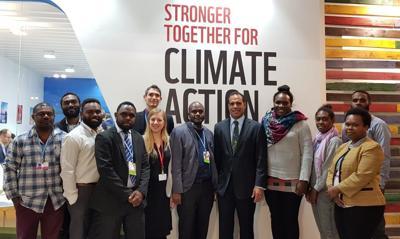
The overall objective of this proposal is to strengthen the Republic of Vanuatu’s capacity to engage with and derive increased direct benefit from the United Nations Framework Convention on Climate Change (UNFCCC). Despite of the COVID Pandemic, Vanuatu as with other countries are keen to continue to build on from the 2020 climate action momentum. This proposal outlines our strategic vision, approach and series of activities to achieve this objective. 

Via a series of procedural reforms, technical trainings, participatory meetings, and engagement with all sectors of society, and alongside its multiple civil society, non-government, private sector, academic and international development partners, Vanuatu’s Ministry of Climate Change aims to:

  1. Reform and streamline the Republic of Vanuatu’s engagement with the UNFCCC Secretariat, its bodies, committees, working groups and funding mechanisms
  2. Effectively meet the reporting obligations to the UNFCCC (e.g. National Communications, Biennial Update Reports, National Adaptation Plans, and Nationally Appropriate Mitigation Actions etc.
  3. Strengthen the climate change negotiation and representation capacity of the Republic of Vanuatu at the regional and international level (including but not limited to the fora under the UNFCCC, AOSIS, MSG etc.).
  4. Improve the participation of key stakeholders (including sectorial government, civil society, private sector, academia, community, and youth) in UNFCCC processes with increasing attention paid to gender equity and balance.
  5. Expand the general public’s awareness and knowledge of the country’s engagement in UNFCCC processes and resultant benefits to the nation.

This strategic program is anticipated to commence in April 2021 with an estimated cost for the full range of activities of 2,600,000 VUV. The Republic of Vanuatu’s Ministry of Climate Change will coordinate and steer implementation of the initiative, with the support of numerous civil society, private sector, academia and development partner actors. 

The outcomes of this initiative that this Ministry of Climate Change program will be working towards are namely:  

  1. Reform and streamline the Republic of Vanuatu’s engagement with the UNFCCC Secretariat, its bodies, committees, working groups and funding mechanisms
  2. Effectively meet the reporting obligations to the UNFCCC (e.g. National Communications, Biennial Update Reports, National Adaptation Plans, and Nationally Appropriate Mitigation Actions etc.
  3. Strengthen the climate change negotiation and representation capacity of the Republic of Vanuatu at the regional and international level (including but not limited to the fora under the UNFCCC, AOSIS, MSG etc.).
  4. Improve the participation of key stakeholders (including sectorial government, civil society, private sector, academia, community, and youth) in UNFCCC processes with increasing attention paid to gender equity and balance.
  5. Expand the general public’s awareness and knowledge of the country’s engagement in UNFCCC processes and resultant benefits to the nation.


Funding
Donor
Organisation: UK High Commission
Total Funding USD:
$26,000.00
Progress Indicator
0-25%
FRDP Goals
Goal 1: CCA/DRR
Project Status
Current
Project Scope
National
Project Type
Capacity Building
Planning and Governance
Policy Formulation and Integration
Policy Support
Project Locations
Ministry of Climate Change, Port Vila, VU
Project Map Points