Short Title:
MACBLUE - Coastal Carbon Sinks Pacific
Description

Starting Situation

Seagrass, mangroves and salt marshes sequester carbon at rates up to 66 times faster than terrestrial forests and store up to 5 times more carbon per hectare. Pacific Island Countries (PICs) possess significant Seagrass and Mangrove (SaM) resources, providing further ecosystem services related to shoreline protection, food security, tourism revenue and water quality. Habitat loss has been increasing rapidly, yet no adequate baselines exist to determine extent of habitats, rates of loss, or design of targeted management solutions. Methods for the assessment of carbon stocks and emissions in SaM areas exist since 2012, but have not been applied consistently to SaM areas in PICs. Policy makers and researchers note the urgent need to collect nationally relevant SaM data based on consistent methods, that ensure transparency and traceability to mitigate the loss of the world’s coastal carbon sinks and reduce the decline of coastal biodiversity.


Short Project Description

In close collaboration with national and regional partners (SPREP, SPC, USP, CSIRO, CIFOR) and the “Blue Planet” Initiative within the global Group on Earth Observations (GEO), the project will be mapping the SaM status in each of the 4 partner countries, and will assess related carbon storage capacity and ecosystem services. Resulting national inventories of SaM habitats, and associated blue carbon sinks and ecosystem service values will support government partners and policy makers in their efforts to strategically develop and implement conservation, management and rehabilitation efforts. Governments will be assisted to establish nationally appropriate incentives for sustainable management and rehabilitation efforts based on the quantification and documentation of SaM carbon stocks and the resulting emission reductions as part of NDCs and National Adaptation Programmes of Action (NAPAs).

Replication Potential

In the context of collaboration with national and regional technical agencies the project will refine and adapt remote sensing data technology for SaM mapping and carbon storage assessment methods for wide-ranging application in PICs during and beyond the project period. Project-based demonstration of effective mapping, monitoring and management regimes aims to foster and support national and regional capacity and up-scaling of these approaches in partner countries and neighbouring PICs. Collaboration and sharing of techniques and experiences with the IKI project “Blue Solutions – Implementing the CBD Strategic Plan in the field of marine and coastal biodiversity” and with the currently planned regional project on “Conservation of biodiversity, seagrass ecosystems and their services – safeguarding food security and resilience in vulnerable coastal communities in a changing climate ” will maximise replicability within the wider region and in collaboration with further global stakeholders
Funding
Donor
Organisation: BMUB-the International Climate Initiative (IKI) of the German Federal Ministry for the Environment, Nature Conservation, Building and Nuclear Safety
Total Funding USD:
$10,066,198.00
Progress Indicator
50-75%
FRDP Goals
Goal 2: Low-carbon Development
Project Status
Current
Project Comments

BMUB-Funding: 9.220.000 Euro in USA is - USD 10.066056

Project Type
Planning and Governance
Policy Formulation and Integration
Policy Support
Implementing Entity/Organisation
Organisation: GIZ
Project Contact
Name: Jesse Benjamin
Additional details: Department: Department of Environmental Protection and Conservation Position: Director General-Ministry of Lands and Natural Resources
Project Map Points
Short Title:
GEF 8 E-Mobility GGGI
Description
  1. The project proposes to support the institutionalization of sustainable transport and electric transport in Vanuatu by i) establishing a coordination body consisting of public and private stakeholders; ii) support the preparation of a gender-responsive national sustainable land transport policy; iii) preparation of a E-Mobility Roadmap including the definition of an incentive scheme, charging network development plan and an innovative end-of-life vehicle strategy; iv) establish statistical systems for the collection, processing, and analysis of key data points for decision-making; and v) capacity building of key stakeholders. 
  2. To overcome the challenges and barriers of infrastructure the following actions support the initial uptake of electric vehicles in Vanuatu: i) Feasibility study on the introduction of EVs in a controlled pilot project in Vanuatu to assess applicable technical specification and economic, social and environmental benefits; ii) the deployment of EVs as part of the government vehicle fleet with the integration of Renewable Energy (RE) for vehicle charging within a controlled environment; and iii) technical training for the monitoring, operation and safety of EVs.

   C) In coordination with the work on addressing infrastructure and governance challenges, the following will  work  will be integrated throughout the project: i) preparation of knowledge-sharing material for different target  groups; ii) seminars, workshops and hands-on outreach events on sustainable mobility and EVs

Funding
Donor
Organisation: GEF ( Global Environment Facility )
Total Funding USD:
$1,000,000.00
Progress Indicator
0-25%
FRDP Goals
Goal 2: Low-carbon Development
Project Status
Proposed
Project Scope
National
Project Type
Capacity Building
Community Awareness
Knowledge Communication
Pilot / Trial / Demonstration Project
Policy Formulation and Integration
Policy Support
Executing Entity/Lead Government Agency
Organisation: Ministry of Infrastructure and Public Utilities
Implementing Entity/Organisation
Organisation: United Nations Environment Programme
Project Contact
Name: Anthony Garae
Phone: 678 - 25201
Additional details: City: Port Vila Department: Department Of Energy Position: The Director, Department of Energy
Project Locations
Project - Support to the Acceleration of Sustainable Land Transport and the Introduction of Electric Mobility in Vanuatu, Port Vila, VU
Project Map Points
Short Title:
BRANTV - Phase II
Description

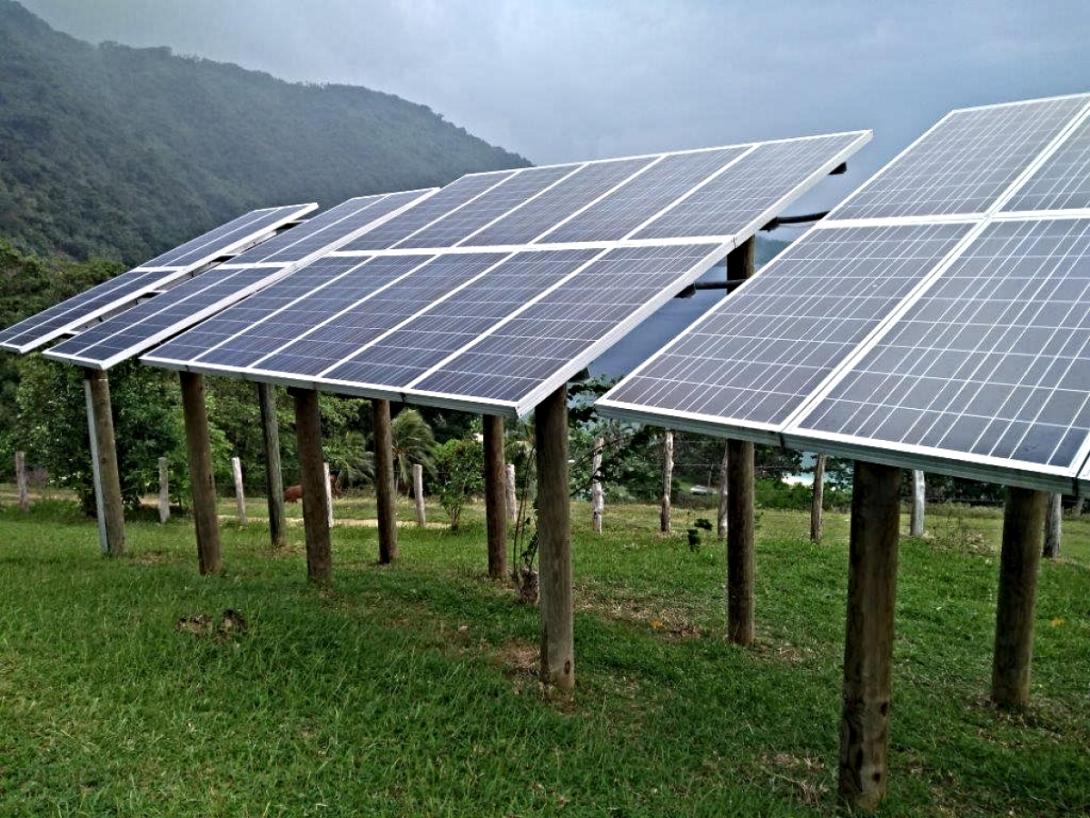
The project considers the current Vanuatu’s Off-Grid RE and EE Promotion Program as the main baseline effort towards achieving the country’s NERM targets. This program includes the installation of RE-based (mainly hydro, and solar) power generation and distribution systems, as well as some Energy Efficiency interventions. This project aims to fill in critical gaps in Vanuatu’s baseline program.


  1. Policy and planning: The project will identify important policy and planning gaps and institutionalize existing policies and plans in place (NERM-IP Plan and NERM) in the baseline program that it will fill, such as guidelines, standards, and incentive policies.
  2.  Institutional: The project will focus and represent relatively innovative incremental aspects. System management will be a critical feature in the sustainability of rural RE systems and their replication and thus an instrumental contribution towards meeting NERM targets.
  3.  Capacity development:  While Vanuatu has substantial baseline program efforts to install RE systems in off-grid areas, training is very limited and generally consists of one-time training upon installation of systems. For larger-scale systems, capturing wind energy, equipment sourcing, and installation capacity is absent.

Green transport: The project will aim to set example of green transport mechanism by introducing electric vehicles

Financing for energy efficiency: The focus will be given to educating the commercial private sector to set up a loan or equity financing mechanism for Energy Efficiency Equipment and productive uses in rural areas.

The project considers the current Vanuatu’s Off-Grid RE and EE Promotion Program as the main baseline effort towards achieving the country’s NERM targets. This program includes the installation of RE-based (mainly hydro, and solar) power generation and distribution systems, as well as some Energy Efficiency interventions. This project aims to fill in critical gaps in Vanuatu’s baseline program.


  1. Policy and planning: The project will identify important policy and planning gaps and institutionalize existing policies and plans in place (NERM-IP Plan and NERM) in the baseline program that it will fill, such as guidelines, standards, and incentive policies.
  2.  Institutional: The project will focus and represent relatively innovative incremental aspects. System management will be a critical feature in the sustainability of rural RE systems and their replication and thus an instrumental contribution towards meeting NERM targets.
  3.  Capacity development:  While Vanuatu has substantial baseline program efforts to install RE systems in off-grid areas, training is very limited and generally consists of one-time training upon installation of systems. For larger-scale systems, capturing wind energy, equipment sourcing, and installation capacity is absent.

Green transport: The project will aim to set example of green transport mechanism by introducing electric vehicles

Financing for energy efficiency: The focus will be given to educating the commercial private sector to set up a loan or equity financing mechanism for Energy Efficiency Equipment and productive uses in rural areas.


Location: 

The project is focused on outer Islands of the country and emphasis will be given to the areas not covered by BRANTV/GEF project and Green Energy Transformation Project (JSB). Specific site will be selected during development of full proposal.


Pico-hydro PV hybrid demo: 1

Large PV mini grids (about 100 kW each): 5

Institutional PV systems (1.9 – 5.2 kW each): 20

Household-scale PV demos (120 W to 1.6 Kw): 100

Family compound-scale PV deployed across full villages: 20

Wind energy system (wind turbine): 1

Funding
Donor
Organisation: Global Environment Facility (GEF) Star Allocation
Total Funding USD:
$2,000,000.00
Progress Indicator
0-25%
FRDP Goals
Goal 2: Low-carbon Development
Project Status
Proposed
Project Scope
National
Project Type
Capacity Building
Community Awareness
Knowledge Communication
Pilot / Trial / Demonstration Project
Planning and Governance
Policy Formulation and Integration
Policy Support
Research
Other
Implementing Entity/Organisation
Organisation: United Nations Development Programme
Project Contact
Name: Anthony Garae
Phone: 678 - 25201
Additional details: City: Port Vila Department: Department Of Energy Position: The Director, Department of Energy
Project Map Points
Short Title:
VCCRP - GCF Project
Description

Organizational Expertise Justification:

Members of the consortium have been working in Vanuatu for over 30 years. We have extensive experience working together and with the government of Vanuatu to help address the immediate and long-term needs of Vanuatu communities across the country. We also have strong experience in helping communities recover from the impacts of disaster events.

Members of this consortium were the key partners in a three year, DFAT-supported AU$2 million community-based adaptation project – Yumi stap redi long klaemet jenis – which pioneered a comprehensive approach to helping communities and local governments prepare for, and manage the immediate impacts of climate variability and extremes, while building the capacity of women, men, girls and boys to develop climate-resilient development pathways. CARE and Save the Children built on this foundation to implement a further 16-month, USAID-supported US$0.5 million community-based adaptation project, while Oxfam implemented a further three-year, Margaret A. Cargill-supported US$847,000 community-based resilience program which continued to build on existing networks and aimed to increase collaboration, knowledge sharing and support between communities, NGOs, relevant government departments and development partners around increasing community and government resilience. Our agencies have also worked in collaboration with communities from across the six provinces of Vanuatu, national civil society organisations and government to develop and implement disaster risk reduction projects, such as the DiPECHO funded “Be Better Prepared (Yumi Redi)” series of projects that focused on community-based disaster risk reduction activities and encouraged communities to form Disaster Management Committees and to support sustainable development action across a range of key sectors, including: livelihoods; water, sanitation and hygiene; education; and gender equality.

Our organizations have extensive experience developing and implementing large scale, long term projects across a range of sectors globally – including multi-year, multi-agency community-based adaptation projects across the Pacific, as well as Bangladesh, Indonesia, Laos, PNG, the Philippines, Thailand, Timor-Leste and Vietnam, valued at over AU$50 million in the past five years alone.

Funding
Donor
Organisation: Green Climate Fund
Total Funding USD:
$32,650,000.00
Progress Indicator
25-50%
Sendai Priorities
Priority 1: Understanding disaster risk
Priority 2: Strengthening disaster risk governance to manage disaster risk
Priority 3: Investing in disaster risk reduction for resilience
FRDP Goals
Goal 1: CCA/DRR
Project Status
Current
Project Scope
Regional
Project Type
Capacity Building
Community Awareness
Field Implementation
Funding - Small Grants
Informal Training Courses
Knowledge Communication
Planning and Governance
Policy Formulation and Integration
Policy Support
Research
Other
Executing Entity/Lead Government Agency
Organisation: Ministry of Climate Change ( NAB, VMGD, NDMO )
Implementing Entity/Organisation
Organisation: Save the Children - Vanuatu
Project Contact
Name: Peter Goodfellow
Organisation: Save the Children - Vanuatu
Additional details: Address: Save the Children Pilioko House, City: Port Vila Department: Program Development and Quality Position: Director of Program Development and Quality Save the Children
Project Map Points
Short Title:
Establishing resilient,low carbon agricutural systems in Tonga, Vanuatu and Samoa
Description

 To reduce the vulnerability of rural communities in Tonga,Vanuatu and Samoa to the impacts of Climate chnage,the proposed project will enable the transition from conventional to climate-resilient, regenerative agricultural (CRRA) practices. Through these practices, the delivery of agricultural ecosystem services will be enhanced and  dependence on external inputs reduced.

To support the adoption of CRRA, the proposed project will:

  1. strengthen cross-sectoral partnerships
  2. enhance market incentives for CRRA
  3. Provide training and support for farmers and 
  4. implement robust monitoring and knowledge-sharing initiatives to support learning and adaptive implementation of CRRA


Funding
Donor
Organisation: Green Climate Fund (GCF)
Total Funding USD:
$30,400,000.00
Progress Indicator
0-25%
FRDP Goals
Goal 2: Low-carbon Development
Project Status
Proposed
Project Scope
Regional
Project Type
Capacity Building
Knowledge Communication
Pilot / Trial / Demonstration Project
Implementing Entity/Organisation
Organisation: Vanuatu: Ministry of Climate Change, Change Adaptation,Meteorogy,Geo-Hazards,Environment,Energy and Disaster Management
Project Contact
Name: Dirk Snyman
Phone: +687 262000
Additional details: Address: 95 Promenade Roger Laroque BP D5 98848 Noumea City: Noumea Department: Pacific Community (SPC) Position: Climate Finance Advisor
Project Locations
Establishing resilient,low carbon agricultural systems in Tonga, Nuku' alofa, TO
Establishing resilient,low carbon agricultural systems in Samoa, Apia, WS
Establishing resilient,low carbon agricultural systems in Vanuatu, PortVila, VU
Project Map Points
Short Title:
LECB II
Description

The LECB Programme phase II aims to assist Vanuatu to implement Output 1 under the programme: Policies, institutional frameworks and national MRV systems strengthened and harmonized to mainstream national mitigation policies and targets in the context of NDCs. This output is expected to support the review and/or formulation of roadmap for NDC implementation including new mitigation actions beyond current NDC commitment periods. The key activity results includes: designing of NDC implementation plans and institutional frameworks; designing and implementation of MRV systems to support implementation and evaluation of NDCs and designing and strengthening the NAMAs in the context of NDC implementation through robust frameworks for NDC implementation plans and future rounds of NDCs.

Funding
Donor
Organisation: GEF SGP
Progress Indicator
75-100%
FRDP Goals
Goal 2: Low-carbon Development
Project Status
Current
Project Scope
National
Project Type
Pilot / Trial / Demonstration Project
Policy Formulation and Integration
Policy Support
Implementing Entity/Organisation
Organisation: Vanuatu - Global Green Growth Institute
Project Contact
Name: Esline Garaebiti
Organisation: Vanuatu Meteorology and Geo-Hazards Department
Project Map Points
Short Title:
BRANTV
Description

The Vanuatu Ministry of Climate Change and Natural Disaster and the United Nations Development Programme (UNDP) have signed a US$2.6 million project document paving the way for a sustainable energy project funded by the Global Environment Facility (GEF). The Barrier Removal for Achieving the National Energy Road Map Targets of Vanuatu (BRANTV) Project is funded by the GEF and implemented by UNDP in partnership with the Vanuatu Department of Energy. BRANTV has the objective of enabling the achievement of energy access, sustainable energy, and green growth targets of Vanuatu (as per the NERM).

Funding
Donor
Organisation: GEF Least Developed Countries Fund (LDCF)
Total Funding USD:
$2,639,726.00
Progress Indicator
25-50%
Project Status
Current
Project Scope
National
Project Type
Capacity Building
Community Awareness
Field Implementation
Informal Training Courses
Pilot / Trial / Demonstration Project
Planning and Governance
Policy Formulation and Integration
Policy Support
Project Map Points